

IMMIGRATION WARS
- Jessica Scipio

- Sep 21, 2025
- 3 min read
HOW CAN AN ILLEGAL IMMIGRANT HAVE RIGHTS; IF THEY ARE ILLEGAL?
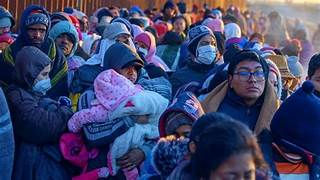
September 21, 2025
11:06AM
By Jessica Scipio
The Immigration War
Rights, Realities, and the Constitutional Conundrum in 2025
In the heated landscape of American politics, the term "immigration war" has taken on a visceral urgency in 2025, particularly under the renewed Trump administration's aggressive enforcement agenda. What began as rhetorical flourishes during campaigns has evolved into concrete actions: mass deportations, expanded ICE operations, and even the controversial invocation of the Alien Enemies Act to target Venezuelan migrants, only to be swiftly struck down by the Fifth Circuit Court. From the deployment of the National Guard in Los Angeles without gubernatorial consent to the proliferation of detention centers in places like Baldwin, Michigan, sparking local outrage and glimmers of resistance, this "war" pits federal authority against humanitarian concerns, economic dependencies, and longstanding legal precedents.
At Its Core Lies A Paradox
How can undocumented immigrants—often derisively labeled "illegals"—claim rights in a nation built on citizenship and borders?
The roots of this conflict stretch back centuries, intertwined with America's self-conception as a beacon for the world's weary. Waves of Irish, Italian, and Chinese immigrants in the 19th century faced nativist backlash, culminating in laws like the Chinese Exclusion Act of 1882. Yet, even then, the U.S. Supreme Court began affirming that territorial presence conferred basic protections. Fast-forward to the 20th century, and post-World War II labor demands via the Bracero Program highlighted immigration's economic lifeline. By the 1980s, amid Reagan-era amnesties, the debate shifted toward enforcement, setting the stage for today's bifurcated discourse: one side viewing borders as sacrosanct, the other as porous pathways to opportunity.
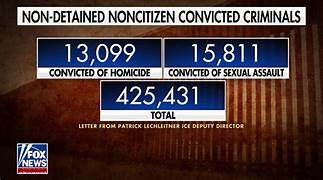
Central to the "immigration war" is a fundamental misunderstanding—or deliberate reframing—of constitutional rights, especially when the undocumented individuals are criminals. However, the U.S. Constitution does not explicitly limit its protections to citizens; instead, it speaks of "persons" within U.S. jurisdiction. The Fifth Amendment guarantees due process to all "persons," while the Fourteenth Amendment extends equal protection and due process to "any person" under state authority. This distinction is crucial: citizenship grants privileges like voting and passport rights, but personhood—triggered by physical presence—bestows fundamental safeguards against arbitrary state power. Undocumented immigrants, by virtue of stepping onto American soil, enter this protective umbrella, a principle enshrined since the nation's founding.
So, how exactly do these rights manifest for those without papers?
Undocumented individuals enjoy protections against unreasonable searches and seizures under the Fourth Amendment, meaning law enforcement cannot raid homes without probable cause. In criminal proceedings, they have the right to a fair trial, including appointed counsel if indigent, per the Sixth Amendment—though this does not extend to immigration hearings, which are civil matters. They can sue for workplace injuries, access emergency medical care under the Emergency Medical Treatment and Labor Act, and even enroll children in public schools, as affirmed in Plyler v. Doe (1982). These aren't "citizen perks" but baseline human dignities, ensuring the U.S. doesn't devolve into a lawless frontier.
Critics, however, decry this as a loophole rewarding lawbreaking. "Why afford rights to those who flout our laws?" they argue, echoing sentiments in the Trump administration's "immigration war room," where policies like family separations and rapid deportations were forged. Figures tied to anti-DACA advocacy now helm DHS policy, amplifying calls to strip procedural hurdles. Proponents of stricter measures point to public safety, citing isolated crimes by non-citizens to justify blanket suspicion. Yet, data from the Cato Institute and others consistently show undocumented immigrants commit crimes at lower rates than native-born citizens, underscoring that rights aren't zero-sum but foundational to a just society.
This tension erupted in 2025's flashpoints, where Ukrainian refugees—fleeing war—became unintended casualties of broad-brush enforcement, trapped in bureaucratic "no-man's land." Court challenges, like the recent rebuke of wartime powers under the Alien Enemies Act, highlight judicial pushback against executive overreach. Meanwhile, sanctuary cities and state-level resistance, from California's protests to Michigan's community mobilizations, illustrate a federalist counteroffensive.
These Battles Reveal Not Just Policy Clashes but A Deeper Philosophical Rift:
Is America a nation of laws or a club for the undocumented?
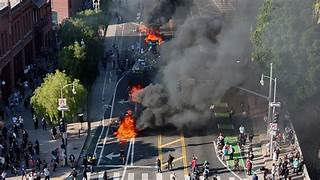
The societal ripple effects are profound. Economically, undocumented labor underpins agriculture, construction, and services, contributing billions in taxes without full benefit access. Denying rights could exacerbate labor shortages and inflate costs, as seen in post-Brexit Britain's woes. Socially, it fosters division, with families torn asunder and communities chilled into silence. Yet, affirming rights promotes integration, reducing underground economies and fostering loyalty—many undocumented serve in the military, seeking citizenship through valor.
Looking ahead, the "immigration war" demands nuance over absolutism. Bipartisan reforms, like expanded legal pathways and tech-enabled border security, could bridge divides without eroding constitutional bedrock. Rights for non-citizens aren't concessions; they're the glue holding America's aspirational ideals intact. In a nation born of immigrants, questioning how "illegals" have rights misses the point: the Constitution doesn't ask for papers at the door—it asks only that we live up to its promise for all who dwell within.

Comments